 +91 97181 19993
 info@kesaria.com
 O-Rings
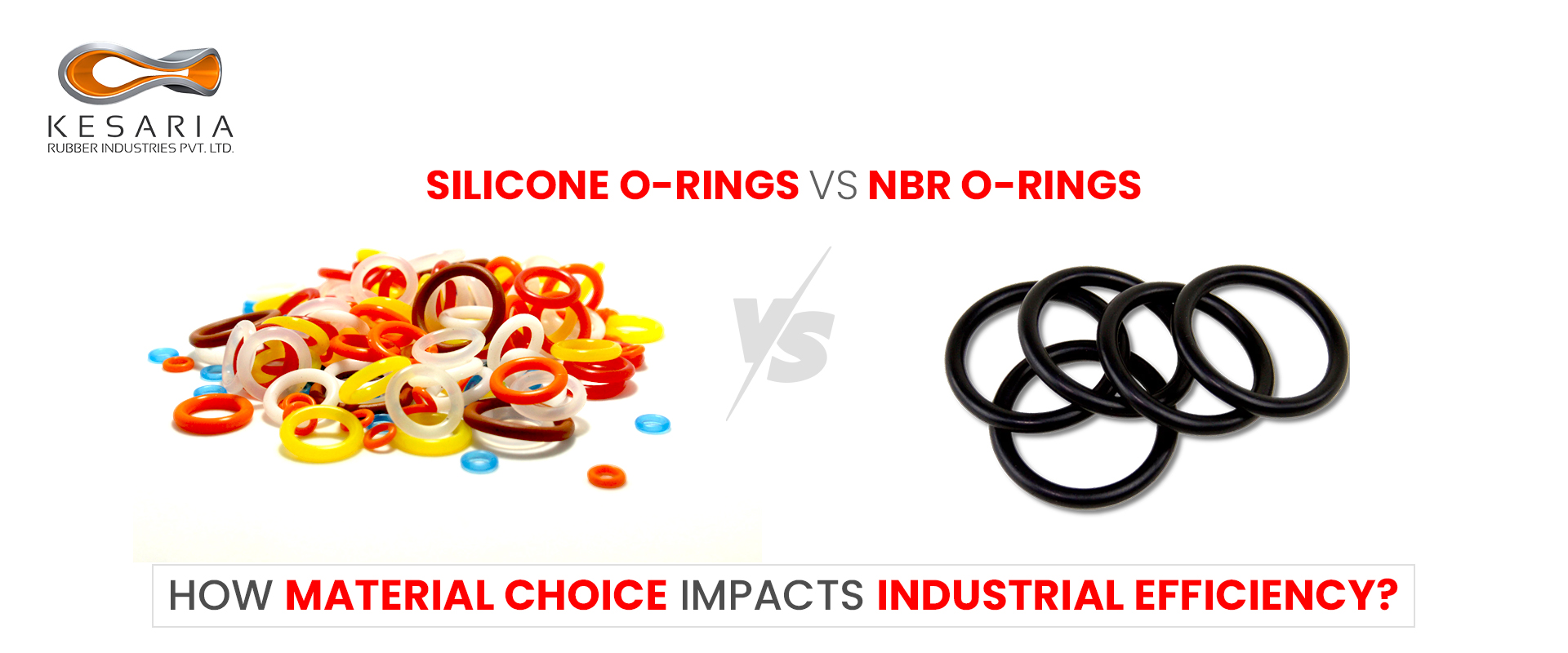
In industrial environments, efficiency is essential and this is not only determined by large components. It is dependent on smaller parts also, such as O-rings. And if these small components do not perform as expected, then failures like leakage, downtime and safety risks surface. Hence, selecting the right rubber O ring material is a strategic decision.
Silicone O-rings and NBR rubber O-rings (Nitrile Butadiene Rubber) are popular elastomers which are often compared. They have specific functions to serve in sealing solutions and their material properties also differ. This impacts performance, longevity and overall efficiency of the respective product.
Understanding O-Rings and Their Role
As the name suggests, an O-ring is a circular elastomeric seal, allowing facilitation of fluids or gases between two mating surfaces. They are used extensively in automotive, plumbing, oil & gas, electrical, appliance and industrial equipment applications.
Along with dimensions, the benefits and function of an O-ring also depends on material compatibility with temperature, pressure, chemicals and environmental conditions.
Silicone O-Rings: Strengths and Limitations
A silicone O-ring has exceptional flexibility and temperature resistance. These can easily operate in temperature ranges from 60°C to +230°C, making them suitable for extreme thermal environments.
Key advantages of silicone O-rings:
- Excellent high and low temperature stability
- High flexibility and resilience over time
- Good resistance to ozone, UV radiation and aging
- Non-toxic and physiologically inert (often used in food, medical and pharmaceutical applications)
These features of silicone O-rings make them useful in static sealing applications, especially where temperature fluctuations are frequent.
Limitations to consider:
- Lower tensile strength compared to NBR
- Poor resistance to petroleum oils, fuels and hydrocarbons
- Higher material cost in comparison to NBR rubber O-rings
So, silicone is a good contender for industries where oil exposure is minimal but thermal stability is critical.
NBR Rubber O-Rings: Performance in Oil and Pressure Strengths and Limitations Environments
NBR rubber O-rings are among the most widely used sealing materials in industrial applications. These have excellent resistance to oils, fuels, grease and hydraulic fluids.
Key advantages of NBR O-rings:
- Strong resistance to petroleum based oils and fuels
- Good mechanical strength and abrasion resistance
- Cost-effective for high-volume industrial use
- Reliable performance in dynamic sealing environments
NBR typically operates within a temperature range of –30°C to +120°C, which suits many industrial and automotive applications.
Limitations to consider:
-
- Limited resistance to ozone and UV exposure
- Reduced performance at extreme high or low temperatures
- Not suitable for applications requiring long-term weather resistance
When systems involve oil exposure, pressure cycling, or frequent movement, NBR rubber O-rings often deliver higher efficiency and longer service life.
How Material Choice Impacts Industrial Efficiency
industries don’t choose silicone or NBR based on material, they make their selection based on the application of the material.
Selecting the wrong O-ring material can result in:
-
- Seal failure before time
- Unwarned leakage
- Increased downtime and maintenance
- Replacement costs
For example, using a silicone O-ring in an oil rich environment may lead to swelling and failure, while using an NBR rubber O-ring in high-temperature or outdoor conditions may cause hardening and cracking over time. So, both the elements have their share of pros and cons.
Other materials, such as neoprene O-rings, may also be considered where moderate oil resistance and weather resistance are both required. However, neoprene typically serves niche applications compared to silicone and NBR.
The Role of the Silicone O-Ring Manufacturer
Material selection alone is not enough. Consistency in compounding, precision molding and quality control are equally critical. A reliable O-ring manufacturer ensures:
-
- Accurate material formulation
- Tight dimensional tolerances
- Batch-to-batch consistency
- Compliance with industry standards
For OEMs and industrial buyers, working with an experienced silicone O-ring manufacturer or NBR supplier can significantly reduce field failures and improve long-term reliability.
Making the Right Decision Before finalizing an O-ring material, engineers should evaluate the temperature in which the element has to operate alongside media compatibility (oil, chemicals, gases). Other factors include deciding whether the application is in a static or dynamic environment like environmental exposure (UV, ozone, weathering), expected service life and maintenance cycles. This application first approach ensures that the rubber O-ring becomes a reliability enabler rather than a failure point.
Free Material Recommendation →
Conclusion
Though small, these components take the product a long way in industrial sealing. Moreover, the right choice between silicone O-rings and NBR rubber O-rings directly affects system efficiency, uptime and cost of ownership. The main aim of industries is to prevent failures of materials before they reach real world fields. And for that, understanding material behaviour is significant.
Kesaria’s role as a manufacturer of these elements is huge. They have impressive expertise in industrial sealing solutions. This helps OEMs and engineers make correct material decisions through application driven guidance designed for reliability, consistency and long-term performance.
Making a colorful O-ring isn’t as easy as mixing paint. The color has to:
-
- Stay bright even when exposed to heat, sunlight, or chemicals.
- Be the same shade across every batch.
- Blend with the silicone without weakening it.
Experts use special pigments and testing to make sure the O-rings are both beautiful and dependable.
Talk to Our Sealing Engineers for a
Free Material Recommendation →