 +91 97181 19993
 info@kesaria.com
 O-Rings
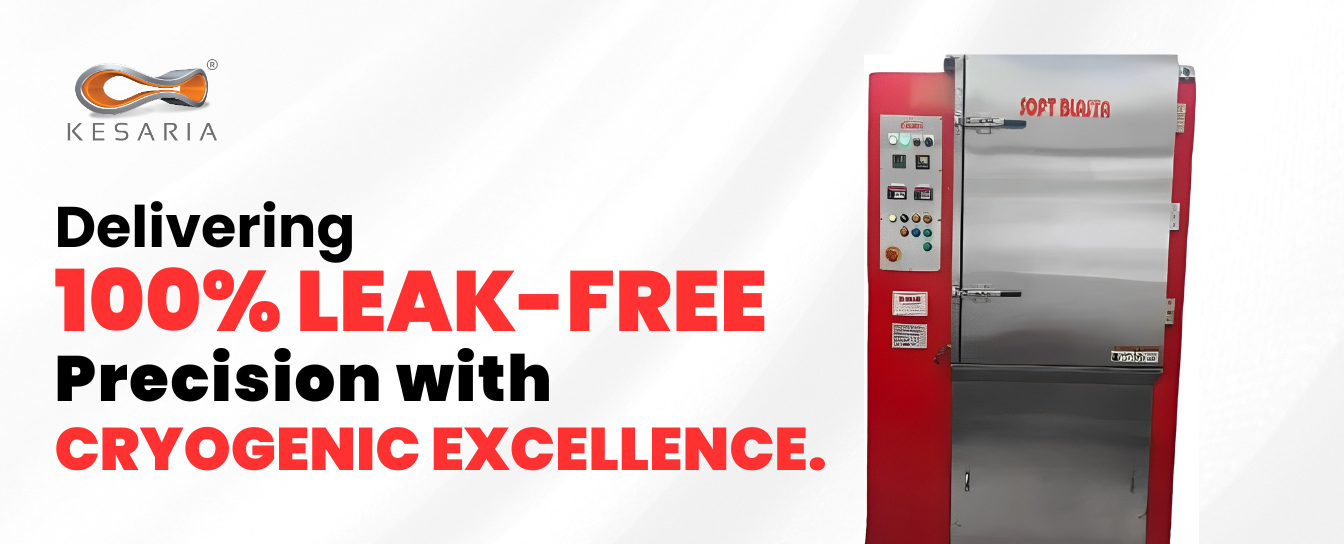
In the world of precision manufacturing, deflashing the removal of excess material (flash) from molded or cast parts is a crucial step that directly impacts product quality, performance, and aesthetics. While traditional deflashing methods like manual trimming, tumbling, or chemical treatments have been around for years, a new age technology has revolutionized the process: Cryogenic Deflashing.
At Kesaria, we believe in combining innovation and precision to deliver superior quality components and cryogenic deflashing plays a key role in achieving that vision.
What is Cryogenic Deflashing?
Cryogenic deflashing is a highly advanced process where molded rubber, plastic, or metal parts are exposed to extremely low temperatures using liquid nitrogen. At these temperatures, the flash (excess material) becomes brittle while the main body of the component remains tough and flexible. The parts are then tumbled or blasted with media such as polycarbonate pellets, effectively removing the unwanted flash without damaging the component.
Why Cryogenic Deflashing Outperforms Traditional Methods
1. Unmatched Precision
Cryogenic deflashing can remove flash even from the most intricate and hard to reach areas of components something that manual or mechanical methods often struggle with. This results in uniform and consistent finishes across every part.
2. Superior Surface Quality
The process ensures a clean, smooth finish without altering the dimensional integrity of the part. Unlike manual trimming, it eliminates the risk of nicks, cuts, or uneven edges ensuring aesthetic excellence and functional reliability.
3. Reduced Rejection Rates
With consistent, high-quality results, cryogenic deflashing significantly minimizes rejection rates and rework, helping manufacturers achieve zero-defect goals a key step toward Kesaria’s mission of 100% leak-free products for longer life.
4. Faster and More Efficient
Cryogenic deflashing can process thousands of parts in a single batch, drastically reducing production time. This makes it ideal for high-volume manufacturing while maintaining tight tolerances.
5. Eco-Friendly and Safe
Unlike chemical deflashing, which uses hazardous solvents, cryogenic deflashing relies on liquid nitrogen, an environmentally safe and clean medium. There are no harmful residues or emissions, making it a sustainable choice for modern manufacturing.
Applications Across Industries
Cryogenic deflashing is widely used in industries where precision and performance matter most such as automotive, aerospace, medical devices, electronics, and sealing solutions. From rubber O-rings and gaskets to plastic connectors and precision seals, this method ensures every part meets stringent quality standards.
Kesaria’s Commitment to Excellence
At Kesaria, we continually invest in advanced technologies like cryogenic deflashing to deliver components that exceed expectations in durability, precision, and performance. By embracing such innovations, we help our customers achieve longer lasting, leak-free products a hallmark of Kesaria’s quality promise.
Final Thoughts
Cryogenic deflashing isn’t just a modern upgrade it’s a game changer in manufacturing. With its precision, speed, and sustainability, it stands a cut above the rest, setting new benchmarks for quality and consistency.
At Kesaria, we’re proud to bring the power of cryogenic technology to every product we deliver ensuring that excellence isn’t just a goal, but a guarantee.