 +91 97181 19993
 info@kesaria.com
 O-Rings
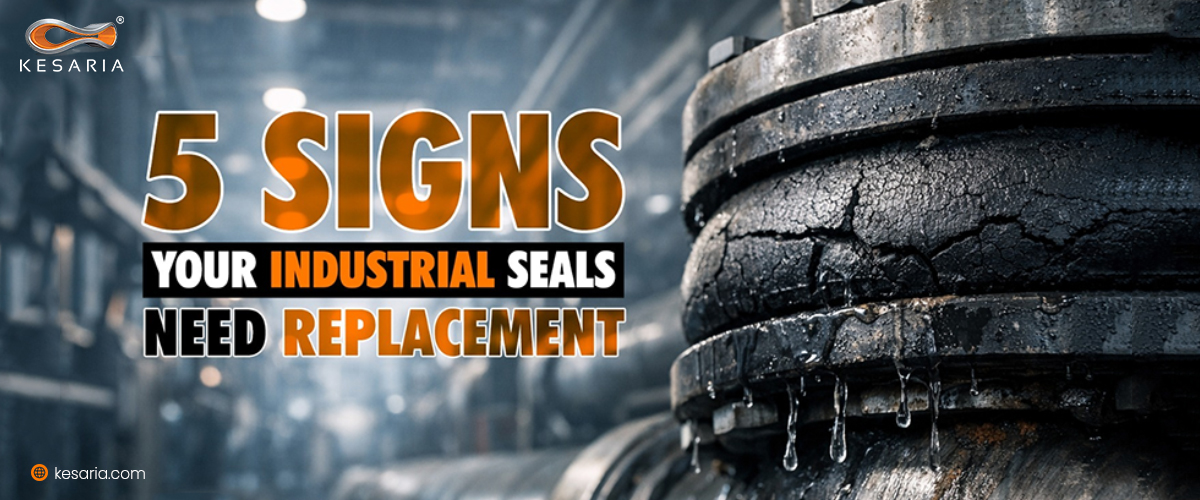
We’ve been in the rubber and sealing industry for over two decades. And if there’s one thing we’ve learned is that seal failures rarely come out of nowhere. They warn you.
The problem is most procurement managers, plant engineers and maintenance heads don’t know what to look for. By the time something breaks down, the damage is already done: a halted production line, an expensive repair, a missed delivery. All of it traced back to a small O-ring or sealing component that cost a fraction of the chaos it caused.
So let’s walk through the five signs every B2B buyer and plant operator should watch for. Consider this your early warning checklist.
1. Visible Cracks, Cuts or Deformation
This one sounds obvious, but you’d be surprised how often it gets ignored on the shop floor. When a seal starts showing surface cracks, flat spots or visible deformation, it has already begun to lose its structural integrity. The elasticity that makes a rubber O-ring work is gone. It may still be “in place” but it is no longer doing its job.
What causes this? Age, heat cycling, chemical exposure or simply using the wrong material grade for the application. A seal that looks worn is worn.
What to do: Schedule an immediate inspection. If you see cracking on one seal, check the surrounding components too, they’ve likely been through the same conditions.
2. Leaks, Even Small Ones
A small leak is not a small problem. In industrial settings, even a minor fluid or gas leak signals that your O-ring has lost its ability to maintain pressure. What starts as a drip can escalate quickly, especially under high-pressure or high-temperature operating conditions. We’ve seen clients patch leaks with tape or sealants as a temporary fix. It never ends well. You’re masking the symptom while the root cause continues to deteriorate and putting your equipment, your team and your output at risk.
What to do: Treat any leak as a red flag, not an inconvenience. Identify the source, replace the seal and investigate whether the failure was material-related or application-related.
3. Unusual Vibration or Noise from Equipment
Your equipment speaks to you, most people just aren’t listening. When seals wear out, they stop absorbing the micro-movements and vibrations they were designed to handle. The result? Unusual rattling, knocking or increased vibration in your machinery.
This is especially common in dynamic sealing applications: rotary shafts, hydraulic cylinders, pneumatic systems where the seal is constantly in motion. A compromised seal in these settings doesn’t just leak. It accelerates wear on surrounding metal components, which is a far more expensive problem for any production facility.
What to do: If your equipment suddenly sounds or feels different, add seal inspection to your diagnostic checklist immediately.
4. Swelling, Hardening or Chemical Degradation
Not all seal damage is visible to the naked eye, but some of it is. If your seals look swollen, feel unusually hard or brittle, or show discolouration, they are reacting chemically to the media they’re in contact with. This is a material compatibility issue and one that a quality O-ring manufacturer should help you avoid at the specification stage itself.
This happens when the wrong rubber compound is selected. For example, using standard NBR (nitrile rubber) in an environment with aggressive chemicals or extreme temperatures, where FKM (Viton) or EPDM would have been the right choice.
What to do: Don’t just replace like-for-like. Evaluate whether the material specification was correct in the first place. A small upgrade in material quality can dramatically extend seal life and reduce total cost of ownership.
5. Increased Maintenance Frequency
If your maintenance team is replacing the same seal repeatedly, every few weeks or every couple of months, then that is a pattern. Something is wrong with the material, the design, the installation or the operating conditions. Frequent replacements clearly indicate an engineering issue.
What to do: Track your replacement history. If a particular O-ring or seal is failing more than twice a year, it’s time to have a proper conversation with your O-ring manufacturer about the root cause.
The Real Cost of Waiting
Here’s what we tell every client who pushes back on proactive seal replacement: The seal itself costs very little. A production stoppage costs a lot. An equipment breakdown costs even more. And the reputational cost of a missed delivery or a quality failure? That’s harder to put a number on.
At Kesaria, we don’t just manufacture rubber, TPE and PTFE components: we work with procurement teams and plant engineers to choose the right material for the right application, so these failures happen as rarely as possible. Because the best seal replacement is the one you planned for, not the one that was forced on you.
A Quick Checklist
✅ Inspect seals visually at every scheduled maintenance window
✅ Log any leaks immediately
✅ Investigate unusual equipment sounds or vibration
✅ Review material compatibility if swelling or hardening is observed
✅ Track replacement frequency and escalate repeat failures
Conclusion
In industrial operations, downtime hits revenue, client trust and delivery commitments. And more often than not, the root cause is something as small and overlooked as a degraded O-ring. Proactive seal management is a business decision.
Partnering with the right O-ring manufacturer who understands your application, recommends the correct material grade and supports you beyond just the transaction is what separates reactive operations from high-performing ones.