 +91 97181 19993
 info@kesaria.com
 O-Rings
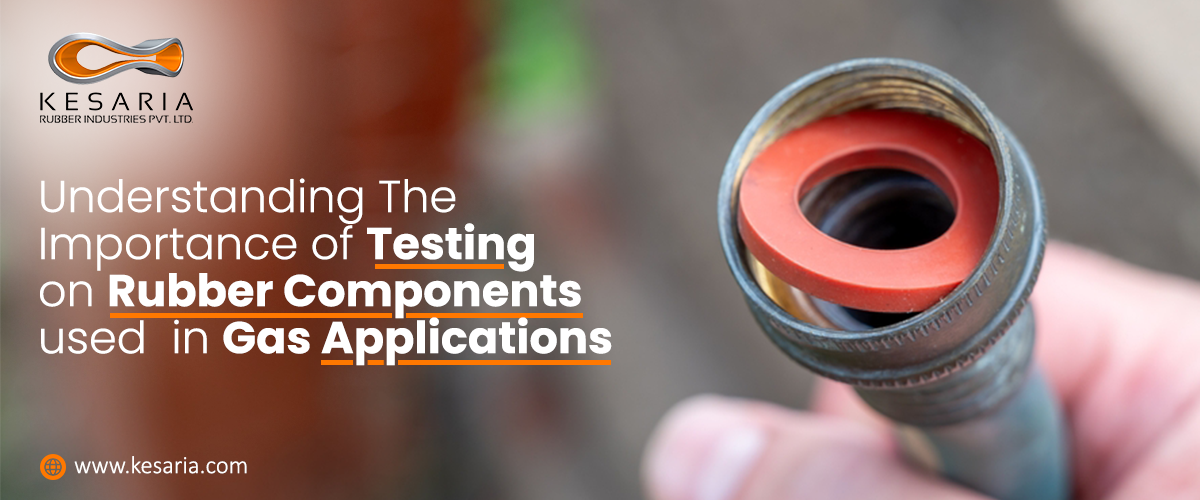
It is a proven fact that success in the industrial world is dominated by precision and safety. Rubber components serve as crucial sealing elements in gas applications. From O-rings and gaskets to diaphragms and hoses; they ensure pressure integrity, prevent leaks, and maintain operational safety across high-pressure environments.
Kesaria Rubber Industries, a trusted manufacturer of engineered rubber components, understands that reliability in gas systems begins with rigorous material testing.
Why Is Testing Essential?
Rubber materials such as NBR, EPDM, and FKM are commonly used in systems carrying gases like oxygen, hydrogen, and natural gas. But gases penetrate much quicker than liquids. Even slight imperfections in rubber can cause leakage of gas, swelling or cracking of components.
Testing identifies potential weaknesses before they lead to field failures. Hence, testing ensures each component fights variable pressure, temperature, and exposure conditions.
Key Testing Methods for Gas Applications
1. Gas Permeation and Leak Testing
Permeation tests determine how easily gases pass through rubber. For critical applications, Helium Leak Testing can detect micro-leaks that might go unnoticed otherwise. This guarantees airtight seals for CNG, LPG, and hydrogen systems.
2. Compression Set and Stress Relaxation
Rubber seals which constantly face compression should retain elasticity to maintain tight sealing. These tests measure the capability of materials to rebound after deformation in order to prevent loss of sealing force over time.
3. Temperature and Thermal Resistance
Gas systems are witnessed operating under extreme conditions sometimes. Testing verifies that the material remains flexible in cold environments and stable at high temperatures, avoiding brittleness or hardening.
4. Chemical Compatibility and Swelling
Exposure to hydrocarbons or reactive gases can alter rubber composition. Chemical resistance tests provide structural integrity and performance consistency to compounds like NBR or FKM.
5. Aging and Environmental Resistance
Rubber components gradually degrade due to ozone, UV light, and oxidation. Accelerated aging tests simulate years of real-world use, helping engineers predict long-term performance and schedule proactive maintenance.
Ensuring Safety and Compliance
Testing in accordance with recognized standards like ASTM D471, EN 682, and ISO 1817 helps guarantee reliability, safety, and international acceptance. Every product must pass through stringent inspection and validation to meet global requirements before reaching customers across sectors.
Innovation and the Road Ahead
Cleaner energy sources like hydrogen and biogas are evolving. Gas systems demand advanced elastomers that can handle aggressive molecules and conditions that fluctuate. Innovation in material science and testing technology ensure readiness for next-generation energy applications.
Conclusion
Testing is equal to safety, reliability, and excellence. All components manufactured in Kesaria undergo strict testing so that they perform under tough conditions. Moreover, experience and expertise alongside strict adherence to quality standards ensures consistent performance, leak-free operation, and long-term reliability making Kesaria the preferred choice for industries where precision truly matters.