 +91 97181 19993
 info@kesaria.com

 O-Rings
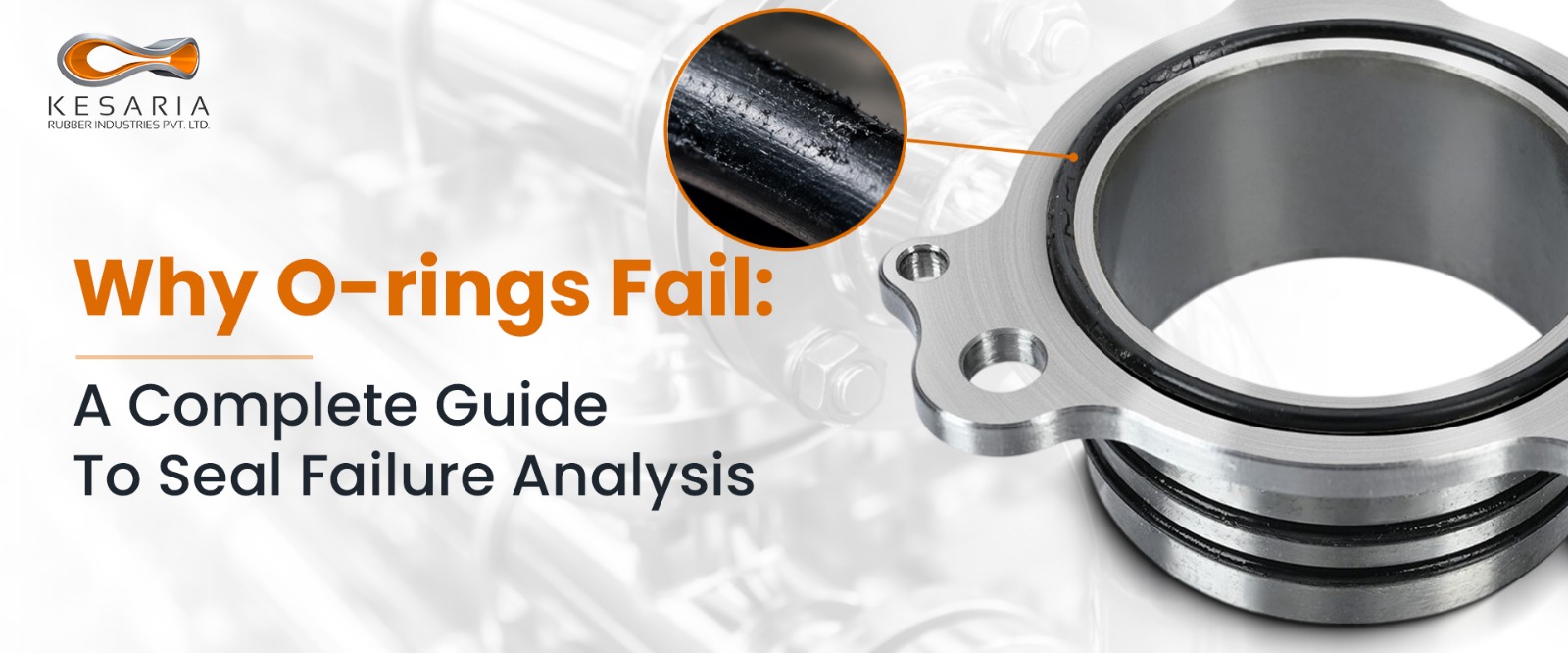
An O-ring failure can lead to leakage, equipment downtime, maintenance costs and warranty claims. But replacing the failed O-ring does not always solve the problem.
Failure can result from incorrect material selection, excessive pressure, temperature, extrusion, wear, poor installation or unsuitable design conditions. Parker’s O-Ring Handbook highlights that seal performance depends on application conditions such as pressure, temperature, media compatibility and design.
This guide explains the common O-ring failure patterns, their possible causes and the key factors engineers should evaluate during failure analysis. The goal is simple: identify why the seal failed and address the underlying cause, rather than treating only the visible damage.
What Causes O-Ring Failure?
O-ring failure can result from several factors, and the material, design and operating conditions must be considered together.
- Incorrect material selection: The compound may not suit the fluid, temperature or application.
- Excessive temperature: Heat can cause hardening, softening or loss of elasticity.
- Pressure and clearance gaps: High pressure and excessive gaps can cause extrusion.
- Chemical incompatibility: Certain fluids can cause swelling, cracking or material deterioration.
- Incorrect compression: Insufficient or excessive compression can affect sealing performance.
- Dynamic movement: Friction and repeated movement can accelerate wear.
- Poor surface finish: Rough mating surfaces can damage the O-ring during operation.
- Incorrect sizing: Improper dimensions can prevent the required compression.
- Installation damage: Cuts, twists, pinching or improper fitting can cause early leakage.
Common O-Ring Failure Modes and What They Indicate
The physical condition of a failed O-ring often provides useful clues about what went wrong during operation.
| Failure Mode | What You May See | Possible Cause |
|---|---|---|
| Compression Set | Flattened or permanently deformed cross-section | Excessive compression, heat or unsuitable compound |
| Extrusion / Nibbling | Ragged, cut or damaged edges | High pressure or excessive clearance |
| Abrasion | Worn, flattened or rough surface | Friction, rough surface or inadequate lubrication |
| Installation Damage | Cuts, nicks, tears or peeled areas | Sharp edges, twisting, pinching or improper installation |
| Chemical Degradation | Swelling, cracking or visible surface changes | Fluid incompatibility |
| Spiral Failure | Spiral cuts, marks or damaged sections | Dynamic movement, friction or poor lubrication |
These failure patterns should not be treated as final diagnoses. The same visible damage can have different causes depending on the application.
A proper analysis should consider pressure, temperature, fluid, movement, groove design, surface condition, and installation method before deciding on corrective action. Parker and Trelleborg both emphasize examining the seal condition alongside its operating environment during failure analysis.
How Operating Conditions Affect O-Ring Performance?
An O-ring must be selected for the actual operating environment, not simply the application name. Engineers should evaluate:
- Temperature: Excessive heat can accelerate hardening, degradation or compression set.
- Pressure: High pressure with excessive clearance can increase extrusion risk.
- Fluid: Incompatible fluids can cause swelling, cracking or material degradation.
- Movement: Dynamic applications introduce friction and accelerate wear.
- Surface condition: Rough or damaged surfaces can increase abrasion.
- Exposure time: Prolonged exposure can gradually change material properties and reduce sealing performance.
A Practical O-Ring Failure Analysis Checklist
A systematic inspection helps identify the actual cause before replacing the O-ring or changing the design.
- Inspect the failed O-ring: Look for flattening, cuts, cracks, swelling, abrasion or extrusion.
- Check the application: Record temperature, pressure, fluid, movement and exposure duration.
- Examine the gland: Check groove dimensions, clearance, surface finish, and sharp edges.
- Review installation: Check sizing, lubrication, twisting, pinching and assembly practices.
- Match the findings: Connect the observed failure pattern with operating conditions before selecting corrective action.
Conclusion
An O-ring failure is often a sign of a larger sealing issue. Understanding the failure pattern helps identify the right material, design, and process changes. This approach supports better sealing performance and longer service life. Connect with Kesaria’s sealing experts to discuss your O-ring requirements.