 +91 97181 19993
 info@kesaria.com
 O-Rings
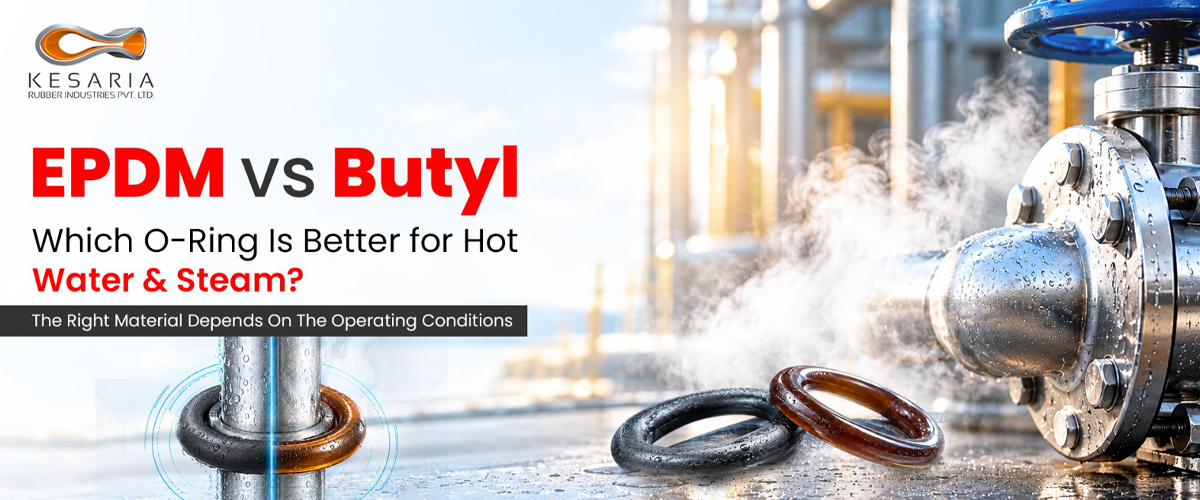
Hot water and steam can put demanding conditions on an O-ring and a material that performs well in water may not perform the same way at elevated temperatures. Temperature resistance also depends on the medium, with hot water and steam requiring specific material evaluation rather than relying only on a standard temperature rating.
EPDM and Butyl are both used in water-related sealing applications, but they offer different performance characteristics. Parker notes that EPDM is particularly suited to hot water and steam, while Butyl also offers resistance to hot water and steam within a lower temperature range.
In this blog, we compare EPDM and Butyl O-rings for hot water and steam applications, looking at their temperature resistance, material behaviour and application suitability to help determine which material makes more sense for specific operating conditions.
Why O-Ring Material Matters in Hot Water & Steam
An O ring used with hot water or steam must maintain its sealing ability despite demanding conditions. Temperature, pressure and repeated heating and cooling can all affect how the rubber performs.
If the material is not suited to the application, it can experience:
- Loss of elasticity, reducing sealing effectiveness
- Changes in hardness, affecting how the O-ring responds under pressure
- Material degradation, shortening service life
- Reduced sealing performance
Increasing the risk of leakage. Importantly, a material’s temperature rating in air does not automatically apply to hot water or steam. The actual operating medium must be considered when selecting the material.
EPDM O-Rings: Where They Make Sense
EPDM is widely used for hot water and steam applications because it can maintain sealing performance under elevated temperatures and prolonged water exposure.
- Hot water: Strong resistance makes EPDM suitable for water-handling applications.
- Steam: EPDM compounds formulated for the application can provide good steam resistance.
- Ageing and weathering: EPDM offers good resistance to ageing and environmental exposure, supporting longer service life.
- Common applications: Frequently used in plumbing, sanitary equipment, water systems and related sealing applications.
However, EPDM performance depends on the specific compound and operating conditions. Temperature, pressure, exposure time and the medium can all affect service life. A temperature rating should therefore not be treated as universal across every EPDM formulation.
For hot water and steam, the right EPDM compound can provide reliable sealing, but material selection should always match the actual application conditions.
Butyl O-Rings: Where They Make Sense
Butyl (IIR) O-rings are valued for their very low permeability to gases and moisture, making them useful where retaining fluids or gases and limiting their passage through the seal is important.
- Low permeability: Butyl has particularly low gas and moisture permeability compared with many other elastomers.
- Water resistance: It offers good resistance to water and can be suitable for certain water-related sealing applications.
- Fluid containment: Its low permeability can be useful where maintaining the contents of a sealed system is important.
- Application flexibility: Butyl can make sense in applications where its specific resistance properties match the operating environment.
However, Butyl is not automatically the preferred choice simply because the application involves water. For sustained exposure to high temperatures or steam, the specific compound, temperature, pressure and exposure duration should be evaluated carefully before selection.
EPDM vs Butyl: What Should You Choose?
There is no universal winner between EPDM and Butyl. The right O-ring material depends on the conditions the seal must handle.
| Application Consideration | EPDM | Butyl |
| Hot water | Strong choice | Application dependent |
| Steam | Well suited with suitable compound | Requires careful evaluation |
| Gas & moisture permeability | Higher | Very low |
| Plumbing & water systems | Common choice | Application dependent |
| High-temperature exposure | Generally better suited | More limited |
For hot water and steam applications, temperature alone should not determine material selection. The decision should also consider:
- Operating temperature
- Steam exposure
- Pressure
- Fluid composition
- Duration of exposure
- Required service life
EPDM can be a strong choice where sustained hot-water or steam resistance is the priority. Butyl may make more sense where low gas and moisture permeability is a key requirement.
Making the Right O-Ring Selection
Don’t select an O-ring by material name alone. The right compound should match the actual operating environment, including temperature, steam exposure, pressure, fluid and expected service life.
For demanding applications, evaluating these conditions before material selection helps ensure reliable sealing performance and longer service life.
Conclusion
The right O-ring is not simply the right material. It is the material matched to the conditions it must handle. For hot water and steam applications, material selection should consider temperature, pressure, medium and service life to achieve reliable sealing performance.
At Kesaria, we help customers select and develop Rubber, TPE and PTFE sealing solutions suited to their specific application requirements. Connect with our technical team to discuss your sealing requirements.