+91 97181 19993
 info@kesaria.com

 O-Rings
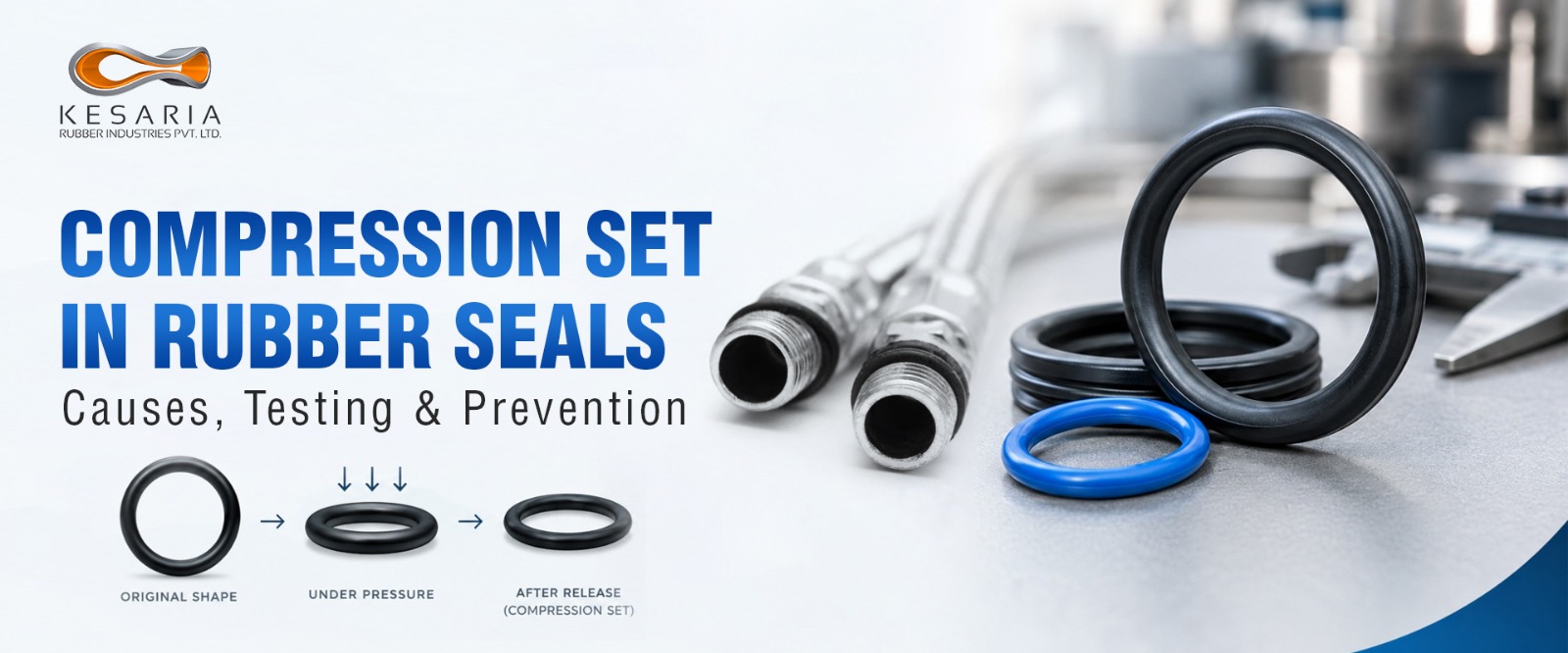
Rubber seals need to stay flexible to maintain a tight seal and prevent leaks. Compression set in rubber seals happens when rubber does not fully return to its original shape after the pressure is removed. This can reduce sealing performance and lead to leakage.
In this blog, we’ll explain what causes compression set, how it is tested, and how the right material, seal design and manufacturing process can help reduce it.
What Is Compression Set in Rubber Seals?
Rubber seals are meant to return to their original shape after being pressed. But sometimes, they stay flattened even after the pressure is removed. This is called compression set.
For example, an O-ring may lose its shape over time and no longer fit tightly enough to prevent leaks. A high rubber seal compression set means the rubber has lost some of its ability to bounce back, which can affect how well the seal works.
What Causes Compression Set in Rubber Seals?
Several factors can cause rubber seals to lose their shape over time.
High temperatures: Too much heat can make rubber lose its flexibility.
Wrong material: Some rubber types may not handle the heat, oils or chemicals they face during use.
Too much pressure: An O-ring squeezed too tightly may not return to its original shape.
Poor curing: If rubber is not heated and processed correctly during manufacturing, it may not recover well after compression.
These causes of rubber seal failure can work together, reducing sealing performance and increasing the risk of leaks.
How Is Compression Set Tested in Rubber?
Compression set testing checks how well rubber returns to its original shape after being squeezed. A rubber sample is pressed for a set time at a specific temperature. Once released, it is measured to see how much it has recovered. This helps manufacturers understand whether the rubber can maintain its shape under pressure.
Test time, temperature and pressure all affect the results, so these conditions must be considered when comparing different rubber materials.
How Can Compression Set Be Prevented?
Choosing the right rubber is the first step in preventing compression set. The material must suit the temperature and liquids it will face during use. The O-ring should also fit properly, as squeezing it too much can affect its shape over time. Proper heating during manufacturing helps the rubber maintain its ability to return to its original shape.
By paying attention to material choice, O-ring fit and manufacturing, manufacturers can reduce O-ring compression set and help prevent leaks.
Conclusion
Compression set in rubber seals can affect sealing performance and increase the risk of leaks over time. Choosing the right material, ensuring a proper fit and maintaining good manufacturing practices can help reduce this risk.
Kesaria manufactures rubber O-rings and custom sealing components to help manufacturers prevent leaks and improve product reliability. Looking for the right sealing solution for your application?
Connect with Kesaria to discuss your requirements.