+91 97181 19993
 info@kesaria.com

 O-Rings
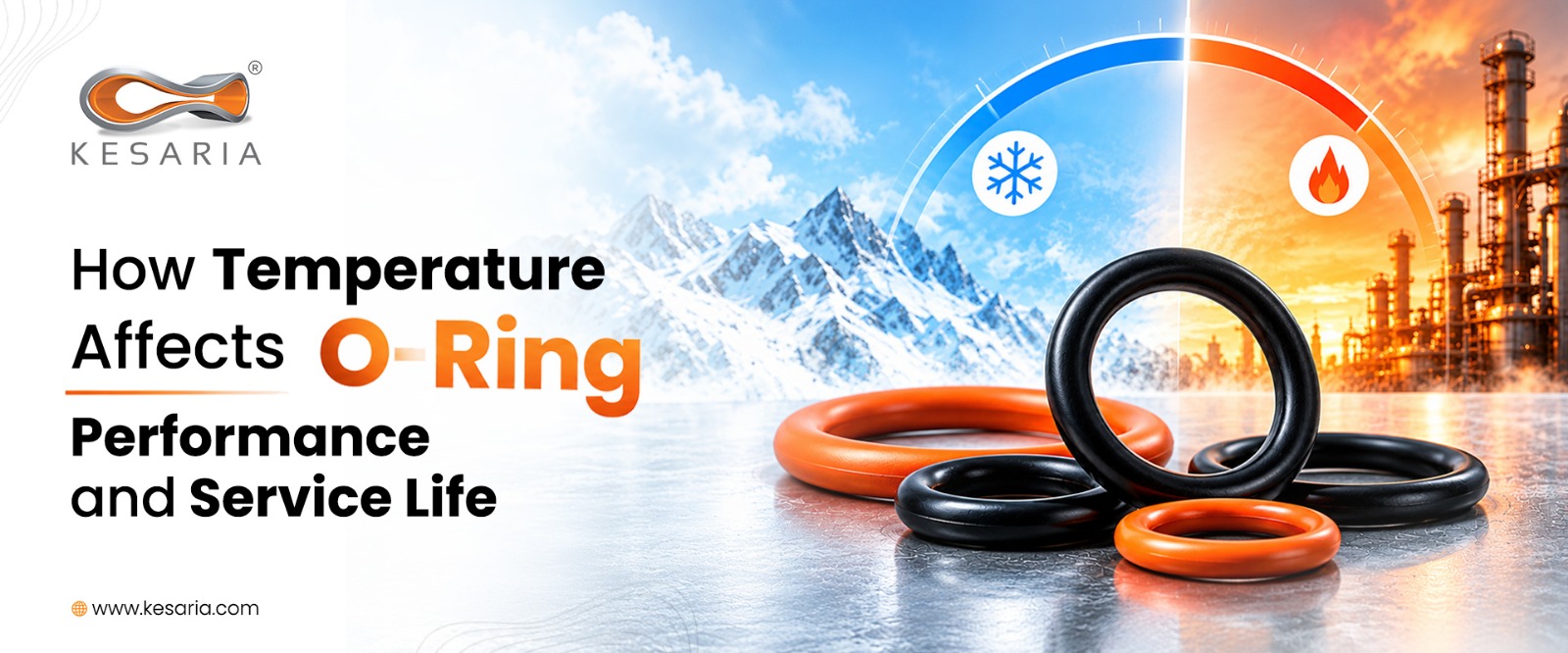
O-rings maintain leak-tight seals in industrial systems, but temperature changes can affect their flexibility, hardness, and sealing performance. Excessive heat can accelerate material ageing, while extreme cold can reduce elasticity.
This blog explains these effects, common signs of temperature-related failure, and how to select O-ring materials for specific operating conditions.
How High Temperatures Affect O-Rings
High temperatures can accelerate O-ring ageing and reduce sealing reliability. Prolonged heat exposure may harden rubber, making it less flexible and more prone to cracking.
Compression set occurs when the O-ring loses its ability to recover after compression, weakening contact with sealing surfaces. Some compounds may soften at elevated temperatures, increasing deformation and extrusion risk under pressure.
Heat can also accelerate material degradation, especially when the sealed fluid is incompatible. The severity depends on the compound, operating temperature, fluid compatibility, and exposure duration.
How Low Temperatures Affect O-Rings
As temperatures fall, rubber becomes harder and less flexible. The O-ring may struggle to maintain contact with sealing surfaces, increasing leakage risk. Static seals can lose sealing force, while dynamic seals may experience increased friction during movement.
Some materials regain flexibility after warming, but cracking or other damage may persist. Performance depends on the compound’s low-temperature rating and operating conditions.
Signs of Temperature-Related O-Ring Failure
- Hardening and cracks: Prolonged heat exposure can make rubber brittle and cause surface cracks.
- Permanent flattening: Poor recovery after compression may indicate compression set and reduced sealing contact.
- Leakage during cold starts: Low temperatures can reduce flexibility and prevent the O-ring from maintaining an effective seal.
- Swelling or softening: Heat combined with fluid incompatibility can alter the material’s dimensions and strength.
These signs may have other causes. Inspect operating temperatures, fluid compatibility, pressure, and installation conditions before confirming temperature-related failure.
How to Choose an O-Ring for Your Operating Temperature
Before selecting an O-ring, evaluate these application requirements:
- Operating range: Identify the lowest start-up temperature and highest continuous operating temperature.
- Peak temperature: Account for short-term temperature spikes and repeated thermal cycles.
- Material compatibility: Choose a compound that withstands both the operating temperature and the sealed fluid. Standard rubber material.
- Exposure duration: Consider how long the seal remains exposed to elevated temperatures.
- Application type: Account for friction, movement, and wear in dynamic sealing applications.
- Design requirements: Verify O-ring dimensions, compression, and groove design.
Published temperature limits vary by compound and fluid. Select materials based on actual operating conditions, not maximum temperature ratings alone.
How to Extend O-Ring Service Life
- Choose the right compound: Match the material to operating temperatures, pressure, and fluid compatibility.
- Control temperature exposure: Keep operating conditions within the compound’s recommended limits.
- Reduce friction: Check lubrication and surface conditions in dynamic applications.
- Inspect seals regularly: Look for hardening, cracks, permanent flattening, and leakage.
- Investigate recurring failures: Replace damaged O-rings and identify the root cause to prevent repeat failures.
Conclusion
Temperature directly affects O-ring flexibility, sealing performance, and service life. Selecting the right material for actual operating conditions helps prevent premature failure.
Need help selecting the right O-ring material? Connect with Kesaria’s technical team to discuss your application requirements.