 +91 97181 19993
 info@kesaria.com

 O-Rings
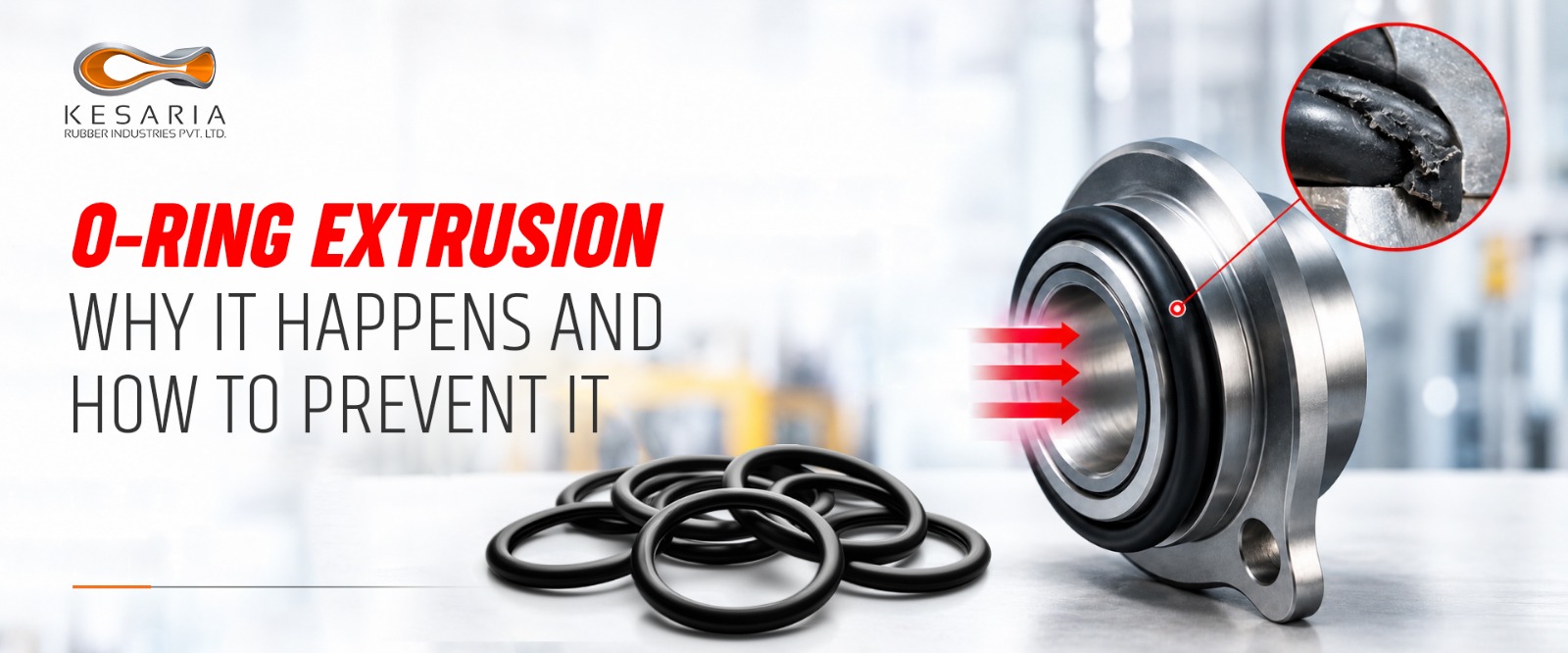
O-rings prevent fluid and gas leakage by creating a seal between mating components. However, high pressure can force the rubber into the clearance gap between these components, causing O-ring extrusion. This damage can lead to material wear, seal failure, and leakage.
This blog explains the main causes of O-ring extrusion, how to identify its signs, and how to prevent it through proper clearance control, material hardness, groove design, and backup ring selection.
What Is O-Ring Extrusion?
O-ring extrusion occurs when system pressure pushes the seal against the low-pressure side of its groove. If the clearance gap between mating components is too large, the rubber can be forced into this gap. The exposed material may stretch, deform, or break away.
Repeated pressure cycles can tear off small fragments, a related failure known as nibbling. Extrusion can affect both static seals and dynamic seals in moving applications.
What Causes O-Ring Extrusion?
O-ring extrusion often occurs when operating pressure exceeds the seal’s ability to resist deformation. High pressure and excessive clearance increase the risk by forcing rubber into the gap between mating components. A compound that is too soft may offer insufficient resistance. Pressure fluctuations can worsen damage over repeated cycles.
High temperatures may soften the material, while incompatible fluids can cause swelling or degradation. Component misalignment, movement, or pressure-induced deflection can also widen the clearance gap. These factors rarely act in isolation. Extrusion risk depends on how pressure, clearance, material hardness, temperature, and fluid compatibility interact under actual operating conditions.
How to Identify O-Ring Extrusion
O-ring extrusion may appear as ragged or nibbled edges, often on the low-pressure side of the seal. Small rubber fragments may be missing, or sections near the clearance gap may look torn or deformed.
Leakage after pressure exposure or repeated operating cycles can also indicate extrusion. Confirm the cause by examining operating pressure, clearance gaps, and gland design.
How to Prevent O-Ring Extrusion
Preventing O-ring extrusion starts with matching the seal design to actual operating conditions. Control clearance gaps by checking component tolerances and accounting for pressure-induced expansion. Select a material hardness that suits the operating pressure and temperature. Review groove dimensions to ensure the O-ring fits correctly.
Check fluid compatibility to prevent swelling or softening. Evaluate peak pressure and repeated pressure fluctuations, not just normal operating pressure. Where required, use backup rings to support the O-ring and restrict its movement into the clearance gap.
Their need depends on pressure, gap size, material hardness, and application design. Proper material selection and dimensional control help reduce premature seal failure.
Choosing the Right O-Ring Design
Before finalizing an O-ring design, verify the maximum and peak operating pressure, clearance gap, manufacturing tolerances, temperature, fluid compatibility, and material hardness. Assess whether backup rings are necessary for the application.
Material selection, seal dimensions, and gland design must work together to control deformation and reduce extrusion risk under actual operating conditions.
Conclusion
O-ring extrusion can be prevented by matching pressure, clearance, material properties, and gland design to application requirements. The right design helps reduce premature failure and maintain reliable sealing performance.
Need help selecting the right sealing solution? Connect with Kesaria’s technical team to discuss your application requirements.